
Before a dental student ever treats a patient, they need to master two things at once: a sterile, well-organized operatory and the muscle memory to work efficiently within it. The Infection Control and Operatory Setup lab is where these habits are formed — using a phantom head workstation, a full sterilization workflow, and hands-on surgical simulation to prepare students for real clinical rotations.
The Phantom Head Workstation: A Complete Operatory in Miniature
The phantom head workstation is the anchor of the simulation lab. It brings together the same core systems found in a live operatory:
- Vacuum pump – simulates suction/aspiration during procedures
- Compressed air supply – powers air-driven handpieces and air-water syringes
- Handpiece system – supports high-speed and low-speed handpieces for cutting, polishing, and finishing
- Adjustable articulator – built into the phantom head to reproduce jaw movement and occlusal relationships
- Universal typodont mount – accepts a wide range of typodont models, so students can switch between restorative, endodontic, and surgical training models on the same unit
This modular design means one workstation supports the full curriculum — from basic cavity prep to implant surgical simulation — without needing separate equipment for each discipline.
Sterilization Workflow: From Chairside to Cassette
Infection control is taught as a sequence, not a checklist. Students learn to move instruments through each stage in order, since skipping or reordering steps compromises sterility.
| Step | Equipment | Purpose |
| 1. Precleaning | Ultrasonic bath | Removes bioburden and debris |
| 2. Drying | Instrument dryer | Prevents corrosion and wet-pack failure before packaging |
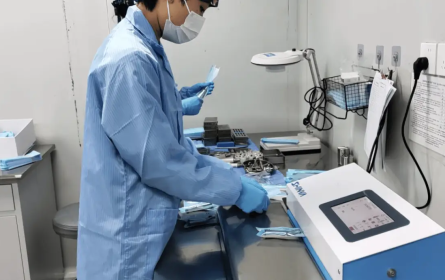
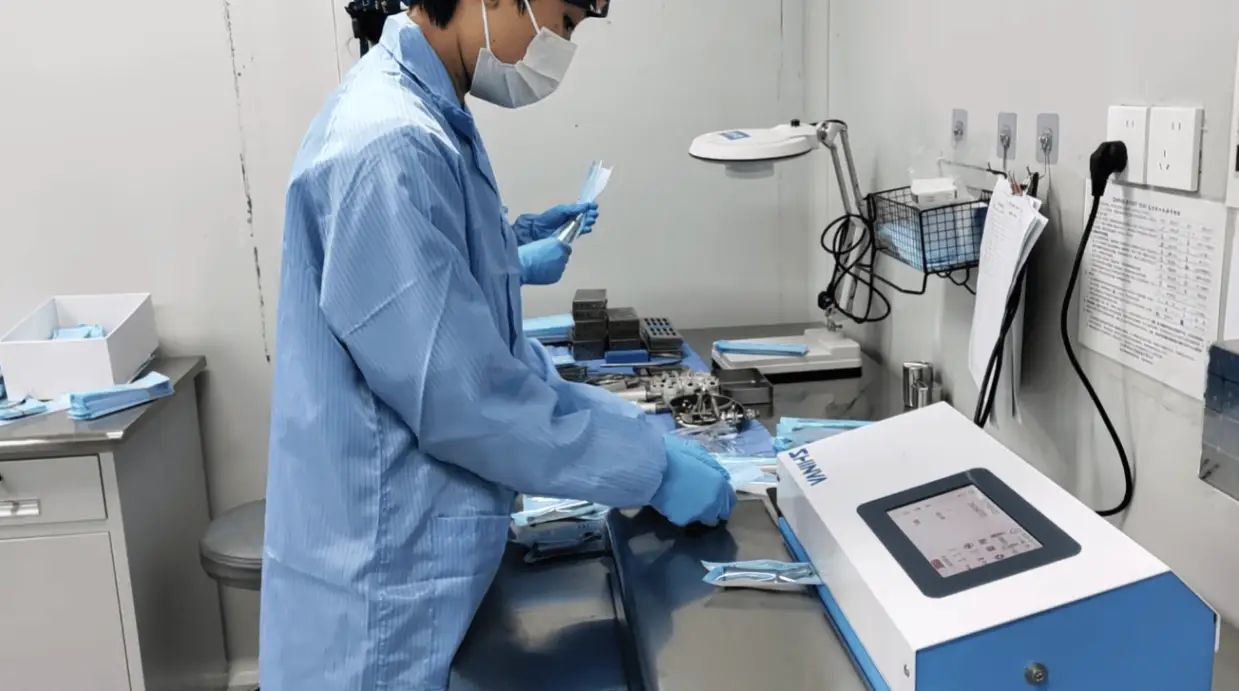
| 3. Packaging | Pouch sealer | Seals instruments in sterilization pouches with chemical indicators |
| 4. Sterilization | Autoclave steamer | Achieves steam sterilization under pressure and temperature |
| 5. Storage | Sterile cassette/tray | Maintains sterility until chairside use |
Precleaning → Drying → Pouch Sealing → Autoclaving → Storage
Students are tested not just on operating each device, but on recognizing failure points — a torn pouch, an incomplete drying cycle, or a missed indicator strip — since these are the same errors that cause sterilization failures in practice.
Handpiece Care and Lubrication
Handpieces get special attention because they combine mechanical precision with infection control risk. Before autoclaving, students learn to flush and lubricate the handpiece head according to manufacturer specifications, run it briefly to distribute lubricant evenly, then wipe excess oil before packaging. Skipping lubrication accelerates bearing wear and can cause handpieces to seize mid-procedure — a lesson reinforced through repeated hands-on cycles rather than lecture alone.
Surgical Setup: CGF, Bone Grafting, and Implant Placement
For the surgical component, students set up a full implant tray: surgical handpiece, drills, implant fixtures, and bone graft material. The CGF (Concentrated Growth Factor) centrifuge is introduced here — students draw and spin blood samples to produce fibrin membranes and CGF plugs used alongside bone grafting in implant placement. This gives students early exposure to regenerative techniques that are now standard in implant surgical protocols, well before they handle live tissue.
Typodont Training: Practicing Before the Patient
Surgical typodont models — mounted on the phantom head’s articulator — let students rehearse the full implant placement sequence: flap reflection, osteotomy, implant seating, and graft placement, all under simulated occlusal and anatomical conditions. Repetition on the typodont builds the tactile control and sequencing speed that’s difficult to teach any other way. You can take a reference from Dental Lab Shop, a digital platform provides extensive dental models, from clinical trainning, to educational use for patients.
Basic Operatory Supplies Checklist
Beyond equipment, every setup includes standard disposables and barriers:
| Category | Examples |
| Barrier protection | Surface covers, chair sleeves, tray barriers |
| PPE | Gloves, masks, face shields, gowns |
| Disposables | Saliva ejectors, air-water syringe tips, cotton rolls |
| Surface disinfection | EPA-registered wipes/sprays |
| Sharps handling | Sharps containers, needle recappers |
Building Habits That Transfer
The goal of this lab isn’t just equipment familiarity — it’s building a workflow that transfers directly to clinic: set up correctly, treat efficiently, sterilize completely, every time. Students who internalize this sequence on the phantom head arrive at their first live patient encounter already thinking like clinicians.
For students ready to move from simulation to sourcing, a reliable dentist supply partner makes the transition easier. Regular typodont training models, diamond burs, diagnostic kits, surgical flap instruments, osseodensification bur kits, and standard handpieces are all available through Dental Laboratorio, along with everyday disposables like cotton rolls, saliva ejectors, and barrier products needed to keep an operatory running. Their digital brochure offers a convenient reference for comparing instrument types and kit configurations before a purchase — useful for students building their own starter kits as they head into clinical rotations.